Lombok Beyond the Beach: Waterfalls, Rice Terraces, and Local Villages
18 Aug 2026
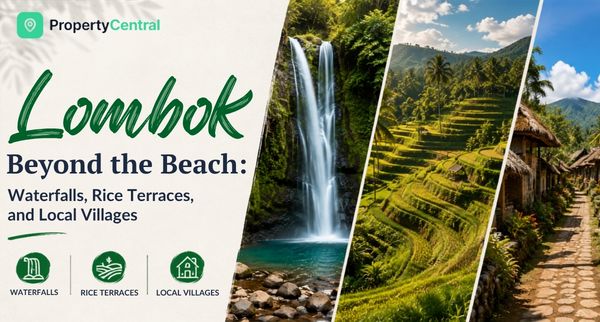
This is the case, and you have to do just that. But on the other hand, there is another aspect to the island of Lombok that most tourists never get to see, since everyone travels to Lombok for the same postcard-perfect images white beaches, turquoise waters, and a surfboard in front of a beach bar. This is just one side of the island. If you travel a bit further into its interior, you will notice an entirely different landscape.
If you're weighing where to base yourself for exploring this side of the island, PropertyCentral lists options across Lombok worth a look before you book.
This guide covers the other Lombok: the waterfalls, the rice terraces, and the villages that rarely make it onto a five-day itinerary but should.
Lombok Waterfalls Worth the Detour
Lombok has more than 20 waterfalls scattered across its interior, though only about ten see regular visitor traffic. Two clusters stand out.
Sendang Gile and Tiu Kelep (North Lombok)
These are the most famous waterfalls in the island; both of them located close to the village of Senaru, at the foot of Mount Rinjani. First one is the two-level Sendang Gile waterfalls, which can be seen during the 30 minutes walk from the parking spot. After that, it takes some more time to reach another waterfall with a curtain effect, named Tiu Kelep. Here the water plunges from the altitude of about 45 meters into a pool of water, suitable for swimming.
Here are several practical details: since October 2016, the guide has become an obligatory addition to the hike at the cost of an extra IDR 250,000 per group, along with the basic entrance fee of IDR 30,000. The ideal season for this hike is April - September as it does not get slippery because of rain.
Benang Kelambu and Benang Stokel (Central Lombok)
More convenient to Mataram and Kuta, this duo near Aik Berik village is ideal for visitors looking for waterfalls without a long trekking experience. Benang Kelambu is more unique since it involves water flowing through the tree roots and green surroundings on the side of the cliff rather than a waterfall cascading in a single flow, which is why it got its name "curtain thread". Benang Stokel, which is just a few steps away, is twin waterfalls that are surrounded by forests; easy enough even for families and amateurs.
This duo would be more practical if you’re staying in south Lombok. For those staying near Senaru or going for a Rinjani trek, Sendang Gile and Tiu Kelep should be a priority.
Lombok Rice Terraces: Tetebatu and Sembalun
Bali gets the fame for rice terraces, but Lombok has its own version, and it's far less crowded.
The village of Tetebatu, located in East Lombok, is positioned at the south end of Mount Rinjani and known as the "Ubud of Lombok" because of its cool climate. The area has terraced paddy fields surrounded by Mount Rinjani and walking paths straight into the fields passing farmers to the waterfall and monkey forest nearby. Since it is one of the coffee growing regions of the area, a coffee farm is usually included as a part of rice field tour. Tetebatu is approximately 1.5–2 hour drive from Lombok International Airport.
Sembalun is a mountainous valley on the eastern slopes of Mount Rinjani providing a view of the terraces in cooler climate and higher altitude surrounded by mountains on almost all sides. It is also the major base camp for the climb to Rinjani, so even if you are not going to climb it, you will still visit Sembalun on your way up.
It’s always best to go to either one early in the morning when the lighting is still nice and the heat isn’t too hot; also, visiting the waterfalls together on the same day works really well because tour companies always put together Tetebatu and the waterfalls together in one trip.
Lombok Villages: Where Culture Is Still Daily Life
The island's Sasak villages are where Lombok's identity becomes tangible not staged for tourists, but genuinely lived in.
Sukarara is a popular weaving village. There is hardly any home without a wooden loom and the art of songket weaving of intricately detailed and gold thread decorated cloth is a skill traditionally handed down from mother to daughter and not a tourist attraction. The visitor can see how it is done, have a try at it himself and purchase the cloth from the very weavers.
Sade and Ende are traditional Sasak villages, whose construction is unique in that the houses have thatched roofs and buffalo dung treated floors - a building practice that has existed for many years and persists to date. A visit to Sade village provides a better idea of Sasak culture before the modern times than any other place on the island.
Bayan, located near Senaru in the north, is known as the place where Wetu Telu religion was born, Wetu Telu being an interesting local religion combining elements of Islam, animistic and Hindu beliefs. It is less visited by tourists than Sukarara and Sade and may be preferred for those wishing for some peace.
Banyumulek and Penujak are another pair of craft villages but this time dealing with ceramics - hand-thrown clay pots.
Building an Itinerary
A realistic way to combine these without exhausting yourself:
North Lombok day: Senaru village → Sendang Gile → Tiu Kelep. Start early, wear proper shoes, and budget the full day.
Central Lombok day: Tetebatu rice terraces → local waterfall → Sukarara weaving village, often available as a single guided day trip.
South Lombok cultural stop: Sade/Ende village, easily paired with the beaches around Kuta Lombok since they're close by.
Most of these sites are reachable by hired car or scooter, and local guides are inexpensive and genuinely useful both for navigation and for the context they add about what you're seeing.
Staying central to Tetebatu or the north waterfalls cuts down drive time significantly check PropertyCentral's Lombok listings for stays positioned near these inland routes rather than only along the coast.
Frequently Asked Questions
What is the best waterfall to visit in Lombok? Tiu Kelep is generally considered the most impressive, thanks to its size and swimmable pool, but it requires more of a trek. Benang Kelambu is the better choice for an easier visit.
Are Lombok's rice terraces open to visitors? Yes. Tetebatu and Sembalun both have public walking trails through active rice paddies, and local guides can arrange farm visits.
Do I need a guide for Lombok's waterfalls? For Sendang Gile and Tiu Kelep, a local guide is currently required. For Benang Kelambu and Benang Stokel, it's optional but helpful.
What is the best time of year to visit Lombok's waterfalls and rice terraces? The dry season, April to September, offers safer trails and more predictable weather. Rice terraces are often greenest just after planting, which varies by region.
How do I get to Sukarara or Sade village? Both are accessible by car or scooter from Mataram or Kuta Lombok, and are commonly included in half-day or full-day cultural tours.